





But the Handshake .wallet owner wants to press his case.
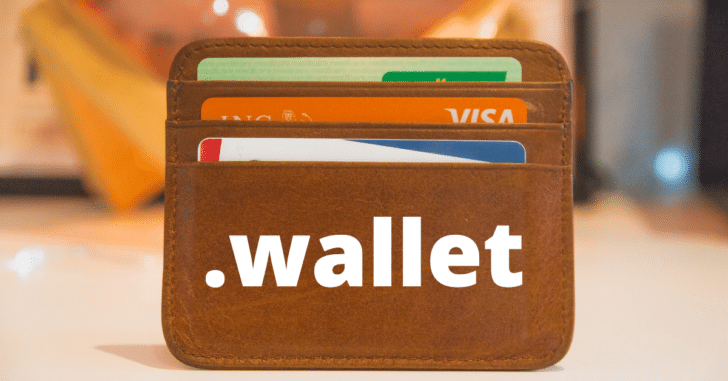
A long-running dispute between Unstoppable Domains and the owner of .wallet in the Handshake protocol has taken a strange twist.
The controversy started when Scott Florsck began selling domains under his .wallet Handshake domain name. Unstoppable Domains has its own .wallet extension.
After a series of lawsuits, there’s one remaining claim: Florsck is asking for declaratory judgment that he’s not violating any of Unstoppable Domains’ trademarks by selling .wallet domains.
Recently, Unstoppable Domains issued a covenant not to sue Florsck for IP issues on .wallet. It also agreed to extend this to registries, registrars, and registrants.
In court documents filed yesterday, Unstoppable Domains asked for Scott Florsck’s lawsuit to be dismissed because it says the covenant negates the controversy.
Florsck, however, wants to continue the case.
I suspect some of his desire is for precedent, which could help the Handshake ecosystem in future disputes with Unstoppable Domains.
Namecheap, a big supporter of Handshake, is covering Florsck’s legal expenses.



Looks like the bully tactic didn’t work as well as UD thought. Leadership stepped down, various people were let go, and now they’re making “promises” to not sue…I’m sure they’re still pushing to get trademarks on blockchain TLDs though.
Promises are cheap, assurances are forever.
any news here?
There is a very easy way of settling this. In Web3, there are multiple blockchains. There are also various ‘cryptographic architectures’ that offer Web3 services and extend off main chains.
There are many of these centred around Ethereum-like coding, and they are said to be ‘EVM (Ethereum Virtual Machine) Compatible’
The Handshake Blockchain is a Bitcoin fork/copy and stands alone.
Nevertheless, all of these structures have a technology known as a ‘block explorer’ which is generally a registry of every single transaction that has happened there, since the architectures’ genesis.
It is a very simple thing to use the ‘FtB’ (First to Blockchain) method to establish who ‘owns’ what.
These explorers are transparent, can’t be retrospectively altered and are therefore beyond repute.
It’s a very simple thing to make a ‘stake a claim’ to a domain asset by furnishing the block explorer proof.
Scott Florsck is right to pursue the case, because it’s bigger than just .wallet. If a domain business tries to monetize a TLD when someone else has ‘FtB’ proof they own it first then that ‘someone’ deserves to be compensated for the ‘IP’ theft, the name should be returned to them, and a ‘criminal forfeiture’ case should be executed.
There’s really no need for civil legal wrangling here, though there is room for statute provision to support criminal prosecution.
I’d add it’s also important to recognise Web3 names are much more flexible than ICANN names, though their use case potential varies according to the properties of the ‘names’ token, and this varies from one architecture/blockchain to another.
Acting as an SLD (Second Level Domain) generator is the only thing ICANN TLDs (Top Level Domains) can do. This is not true of Web3 Domains/Names/IDs .
SLD generation metrics is an antiquated, inaccurate and incomplete way of comparing one Web3 domain business with another. It is a method only suited to legacy technology. Web 3 publishing and content creators don’t seem to be able to grasp this, for reasons unknown.