







Brands railed against .sucks in the 2012 round. How will they feel about some of these 2026 applications?
Trademark holders threw a fit in the 2012 round due to an application for .sucks.
They argued the extension was created solely to force them to fork over cash to keep their brand.sucks from landing in someone else’s hands.
The .sucks business model certainly made it appear this way. Sunrise pricing was an unheard-of $2,500. Consumers who wanted to register a .sucks could do so for just $10, as long as they used the registry’s platform to create a site.
Even ICANN asked the FTC to launch a review.
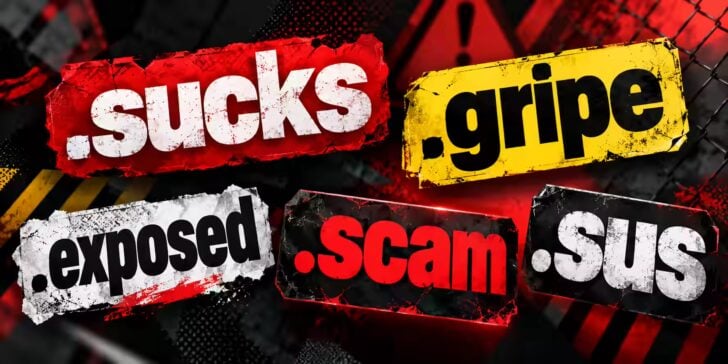
It will be interesting to see how a few similar applications this year play out.
XYZ’s application for .scam is the most obvious.
The applicant states, “.SCAM gives people a place to exercise free speech, share warnings, and help others spot trouble before it spreads. Turn the word against deception.”
The company also applied for .sus, a term the youngsters use to describe something suspect.
Brands might also pay close attention to XYZ’s application for .ass. Officially, XYZ says “ASS can be a short form of words such as asset, association and assistant. It can represent something of value, a group organized around a shared purpose, or a person or digital agent that helps a user.”
Hmm.
We don’t yet know XYZ’s business model for these names, but trademark interests will keep a close eye.
It’s also possible that brands might not care. After all, .gripe and .exposed were in the last round. Neither has more than 3,000 registrations in their respective zones, despite pricing below $20.
A couple of other strings this round might attract more defensive registrations.
Eight companies applied for .official. “Official” is the term that many companies use to separate their sites from all of the copycats. This is certainly one brand owners should consider registering or blocking.
There’s also .brand, which seems rather official. Nine applicants are going after the string.




Leave a Comment